A Brief History of Beer Culture
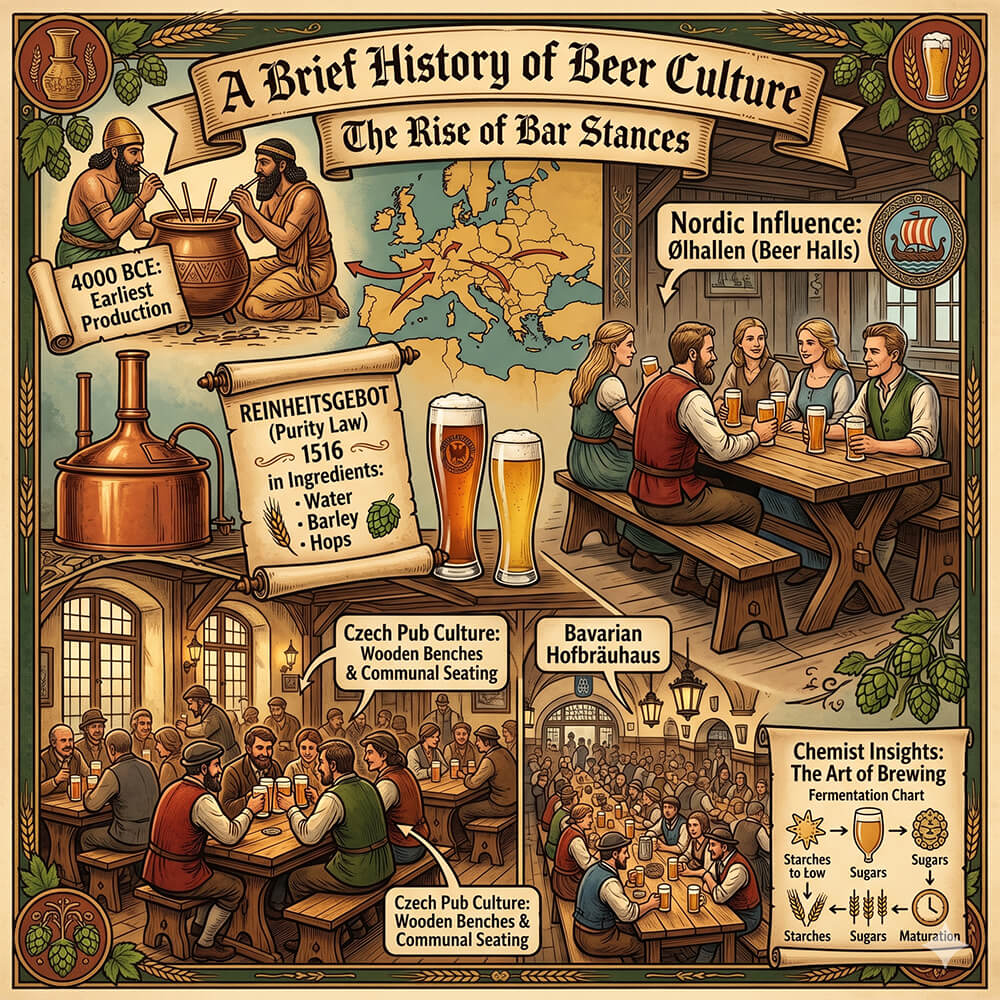
Beer has been an integral part of European culture for thousands of years. The earliest evidence of beer production dates back to ancient Mesopotamia around 4000 BCE. As civilizations evolved and trading routes expanded, the art of brewing spread throughout Europe.
In Germany, the Reinheitsgebot (Purity Law) was established in 1589, governing the ingredients and brewing processes used to produce traditional German beers. This law has contributed significantly to the development of distinct beer styles, such as lagers and wheat beers.
The Rise of Bar Stances
As the popularity of beer grew, so did the need for a social space where people could gather and enjoy their favorite brews. The concept of bars or inns (German: Gasthäuser) emerged, providing a communal area for people to meet, share stories, and drink beer.
In the 17th and 18th centuries, the traditional Czech pub culture flourished, with wooden benches and tables becoming a staple feature. This style of seating allowed patrons to sit comfortably while enjoying their beers and socializing with friends.
Bavarian Heritage
The Bavarians, known for their love of beer and tradition, have developed a unique bar stance culture. In the 19th century, the Hofbräuhaus in Munich became famous for its lively atmosphere and traditional seating arrangements. The long wooden tables and benches allowed patrons to gather and socialize while enjoying their beers.
Nordic Influence
Scandinavian countries, such as Norway and Sweden, have also contributed to the evolution of bar stances. In these cultures, the concept of a “beer hall” (Norwegian: Ølhallen) emerged, where people could gather to enjoy beer, food, and company.
The traditional Norwegian seating arrangement, known as “bänken,” features long wooden benches that allow patrons to sit comfortably while enjoying their beers. This style of seating has been adopted in many Scandinavian countries, including Sweden and Denmark.
Chemist Insights
From a chemist’s perspective, the art of brewing beer is a fascinating process that involves the conversion of starches into fermentable sugars, followed by fermentation and maturation. The specific conditions used during this process can greatly impact the final product’s flavor profile and character.
The same principles apply to the development of different bar stances. The materials used (wood, metal, or plastic), the design of the seating arrangement, and the overall atmosphere created can all influence the patron’s experience.
Conclusion
In conclusion, the art of bar stances is a rich tapestry woven from historical, cultural, and scientific threads. As we explore the world of beer culture, it becomes clear that different regions have developed unique approaches to enjoying this beloved beverage.
Whether you’re sitting on a traditional Czech bench or sipping a cold pint at a modern craft brewery, the art of bar stances is an integral part of the beer-drinking experience. So next time you raise a glass, take a moment to appreciate the rich history and cultural heritage that has shaped our love of beer.




 Aggie Owned and Operated