The Matcha Phenomenon: A Journey Through Brewing Science, History, and European Heritage
As we delve into the world of The Matcha Phenomenon, it’s impossible not to notice the green beverage’s sudden surge in popularity across the UK. With British companies experimenting with novel applications and store shelves overflowing with matcha products, it’s clear that this Japanese staple has become a cultural phenomenon. But what lies behind matcha’s rapid growth? And how do we ensure that its rich history and cultural significance are preserved as it continues to captivate our taste buds?
A Brief History of Matcha
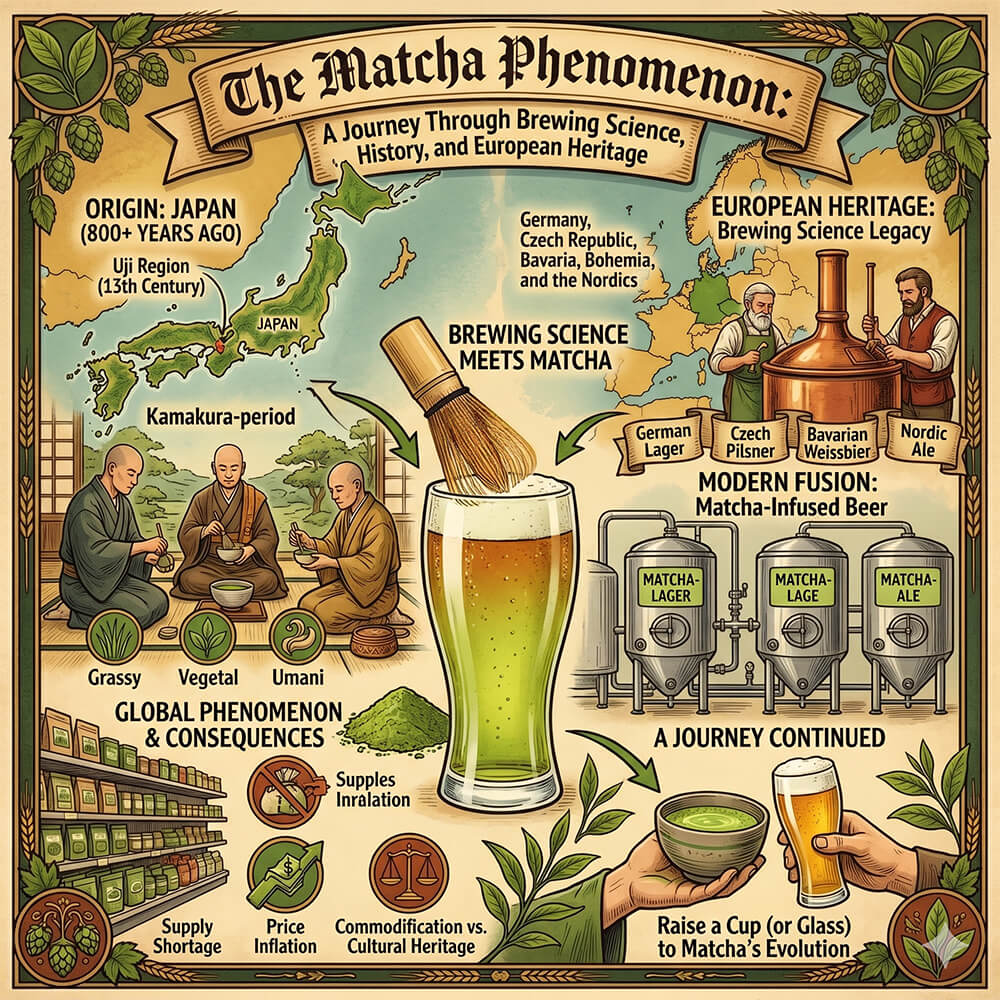
Matcha originated in Japan over 800 years ago, during the Kamakura period (1185-1333). The first recorded matcha cultivation dates back to the 13th century, with tea leaves grown in the Uji region. By the 16th century, matcha had become a staple in Japanese culture, used in traditional tea ceremonies and everyday life.
European Heritage: A Legacy of Brewing Science
As we explore the connection between matcha and European brewing science, let’s journey to Germany, Czech Republic, Bavaria, Bohemia, and the Nordics. These regions share a rich history of beer production, with techniques and traditions that predate matcha by centuries.
German brewmasters, for instance, have been perfecting their craft since the 16th century. Similarly, Czech breweries have honed their skills over several centuries, while Bavarian brewers have been perfecting their Weissbier (wheat beer) since the 18th century. In these regions, the art of brewing has evolved through generations, with each nation developing its unique style and characteristics.
Brewing Science Meets Matcha
Fast-forward to modern times, where matcha’s popularity has sparked a fusion between Eastern and Western brewing traditions. Breweries in Europe are now experimenting with matcha-infused beers, combining the Japanese green tea with traditional lager or ale styles.
This innovative approach allows breweries to harness the unique flavor profile of matcha, which is often described as having notes of grassy, vegetal, and slightly astringent undertones. By incorporating matcha into their brewing process, European brewers can create unique flavor profiles that cater to the growing demand for green tea-infused beverages.
The Consequences of Matcha’s Global Phenomenon
As matcha becomes increasingly popular worldwide, concerns arise about its cultural and economic consequences. Supply shortages and price inflation are just a few of the immediate effects, while the long-term impact may lead to a loss of cultural significance and commodification of this centuries-old tradition.
In response, we must strive for a balance between preserving matcha’s rich history and cultural heritage, while embracing innovative applications and novel uses. By doing so, we can ensure that matcha remains a vibrant and dynamic part of our culinary landscape, rather than becoming just another lifestyle signifier.
Conclusion
As the UK continues to experience the matcha boom, it’s essential to recognize the beverage’s rich history, cultural significance, and brewing science heritage. By exploring the connections between Eastern and Western traditions, we can create innovative and unique flavor profiles that cater to this growing demand.
Whether you’re a seasoned brewmaster or simply a green tea enthusiast, the world of matcha offers endless possibilities for exploration and discovery. So, let’s raise a cup (or glass) to the matcha phenomenon, and toast to its continued growth and evolution in the years to come!




 Aggie Owned and Operated